There are only 76 of These Massive Animals Left
About 2,000 years ago, the Javan rhino had a wide distribution across many countries in Southeast Asia. At that time, they could still be found in various parts of China. An even older record indicates that they also inhabited Borneo around 12,000 years ago. Nowadays, the sole remaining habitat of the Javan rhino is in the Ujung Kulon National Park in Indonesia. Research indicates that over the past century and a half, their population has continuously diminished. As of today, experts estimate that only 76 Javan rhinos exist. The actual number may even be lower.
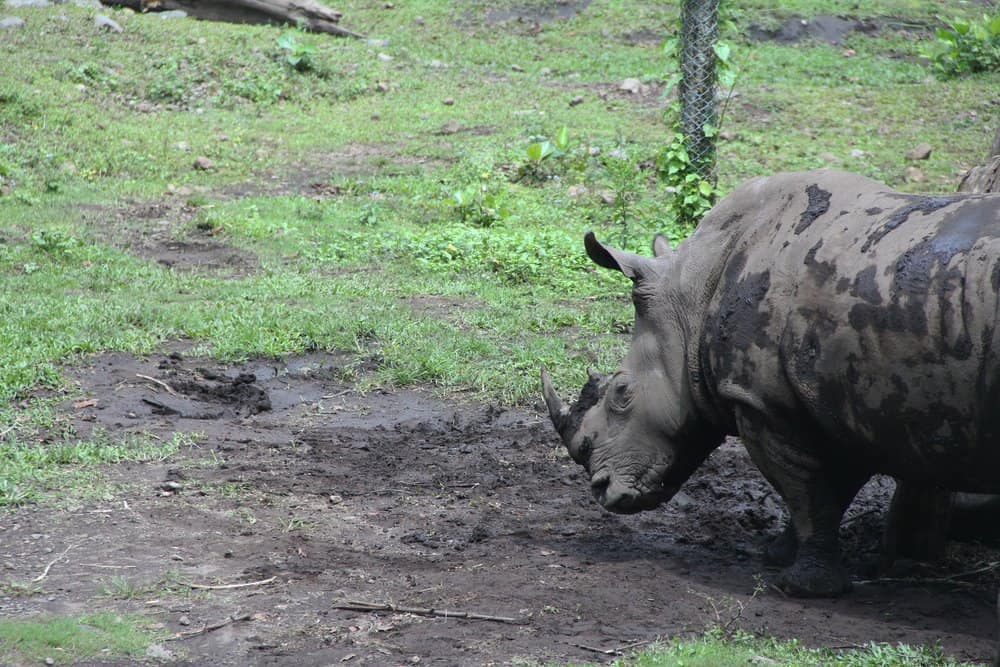
About the Javan Rhino
.
Javan rhinos are typically found in dense jungles, where they tend to avoid humans. This shy nature of theirs makes it challenging for researchers to find and study them, resulting in a lack of information about this species. As a solitary animal, Javan rhinos do not form groups, only interacting with others when they're mating or taking care of their young. Scientists estimate that their lifespan may be around 30 to 40 years. We know that Javan rhinos mate between July and November, although the length of their gestation period remains unknown, with scientists hypothesizing it is likely similar to that of the greater one-horned rhino, about 16 months.
Javan rhinos are plant-eaters and consume plant-based foods. Their diet typically consists of soft twigs, shoots, young leaves, and fallen fruit. Due to their enormous body mass (ranging from 2,000 to 5,100 pounds), Javan rhinos need to eat nearly 110 pounds of plant material per day.
The Danger From Poachers
There is a single remaining population of Javan rhinos found only in Ujung Kulon National Park in Indonesia. A small population once existed in Vietnam, but its last member passed away in 2011. Park rangers started tracking the Indonesian population in 1967, when there were only 25 remaining rhinos. By 2022, the count had increased to 76. Unfortunately, a recent incident occurred when suspected poachers invaded the park, likely resulting in the deaths of nearly a third of all the current Javan rhinos.
.
An international crime ring sprouted up after the global rhino horn trade was outlawed in 1977. The illicit groups hire poachers to infiltrate the park illegally and slay rhinos for their horns, equipping them with high-end gear like helicopters, rifles with silencers, and night vision devices.
The exact number of Javan rhinos currently residing in the park remains unknown.
• Harm to their playground ecosystem caused by alien species which have become stronger than snakes locations.

Aside from the constant threat of poachers, Javan rhinos face other challenges. Because the population is so small, it lacks genetic diversity, and there are only about two males for every female.
TheJavan rhinos are also threatened by the loss of their rainforest habitats. To survive, Javan rhinos need to eat a lot of plants every day. Unfortunately, the national park where they live can only support a limited number of these rhinos.
Helping the Javan Rhino

The International Rhino Foundation (IRF) is working with the Ujung Kulon National Park to assist in safeguarding the remaining Javan rhinos and increasing their numbers. When park officials realized that poachers were a threat, they decided to shut the park to visitors and stepped up security measures. Park employees direct Teams of highly trained Rhino Protection Units (RPUs) that regularly patrol key areas within the park and safeguard their habitats.
Furthermore, scientists uncovered that the rhino habitat was shrinking as a result of an invasive Arenga palm plant. This palm species was taking over the areas where the rhinos normally forage for food. In order to mitigate this issue, the International Rhino Foundation partnered with local residents to eradicate the invasive plants, thereby expanding the rhino's living space. These volunteers were able to clear approximately 250 acres of land of the unwanted plants. As a result, camera traps have since captured images of rhinos in the newly cleared area, including some young calves.
In order to help ensure the rhinos' survival and boost their numbers, experts are exploring the possibility of establishing a second population in a different area. By doing so, the Indonesian preserve would face less pressure, ultimately increasing the chances of the species' survival.
How Can You Help?
To help preserve rhino populations and safeguard these animals from harm caused by poachers, conservation groups require financial support. If you're interested in finding a reliable organization to donate to, we've compiled a list of two renowned non-profits that support rhino conservation efforts.
It is a United States-based organization that safeguards and assists rhino populations in Africa and Asia. Charity Navigator receives the IRF a four-star rating, which is the highest rating you can get, so you can be confident that your donation will be used as intended.
Overseen by the Wildlife Conservation Network, The Rhino Rescue Fund works to decrease habitat destruction and safeguard rhinos from poachers.
Follow A-Z Animals!
- It seems there is no original text for me to paraphrase.
- Have comments? Please add a note at the bottom!
Up Next:
- I'm sorry, but the text you requested is not present. Please provide the text for paraphrasing.
- "There are fewer than 25 yellow-eared S mouses remaining in the world, making it one of the rarest rodents in the world."
- These Are The 10 Most Elusive Animals On Earth
.
Posting Komentar