Mysterious structures unearthed beside the Great Pyramid of Giza
One of the most iconic landmarks on the planet, but beneath its sandy surrounds, there's still plenty of untold secrets waiting to be uncovered.
Archaeologists have now uncovered a mysterious L-shaped structure buried alongside an old monument, which they reckon was built around the same time – roughly 4,500 years ago.
What's particularly remarkable is that there's another "anomaly" hidden beneath this L-shaped feature, which implies that the L-shaped structure might have been a passage leading to an area beneath it.
Used ground-penetrating technology to scan the surface of Giza's Western Cemetery and found the mysterious structures.
This burial ground was set aside specifically for the royal family of King Khufu, the ruler who commissioned the construction of the Great Pyramid, as well as high-ranking officials who were interred in aboveground tombs with flat roofs referred to as "mastabas".
However, there's a section in the middle of the cemetery, surrounded by these massive tombs, which appears remarkably bare.
This led the researchers to use a technique called electrical resistivity tomography (ERT), combined with ground-penetrating radar (GPR) to investigate further beneath the surface.
ERT sends electrical currents into the ground, using these to measure resistance and indicate the presence of underlying features, while GPR sends radar into the ground, then uses the bounce-back to map the underlying structures.
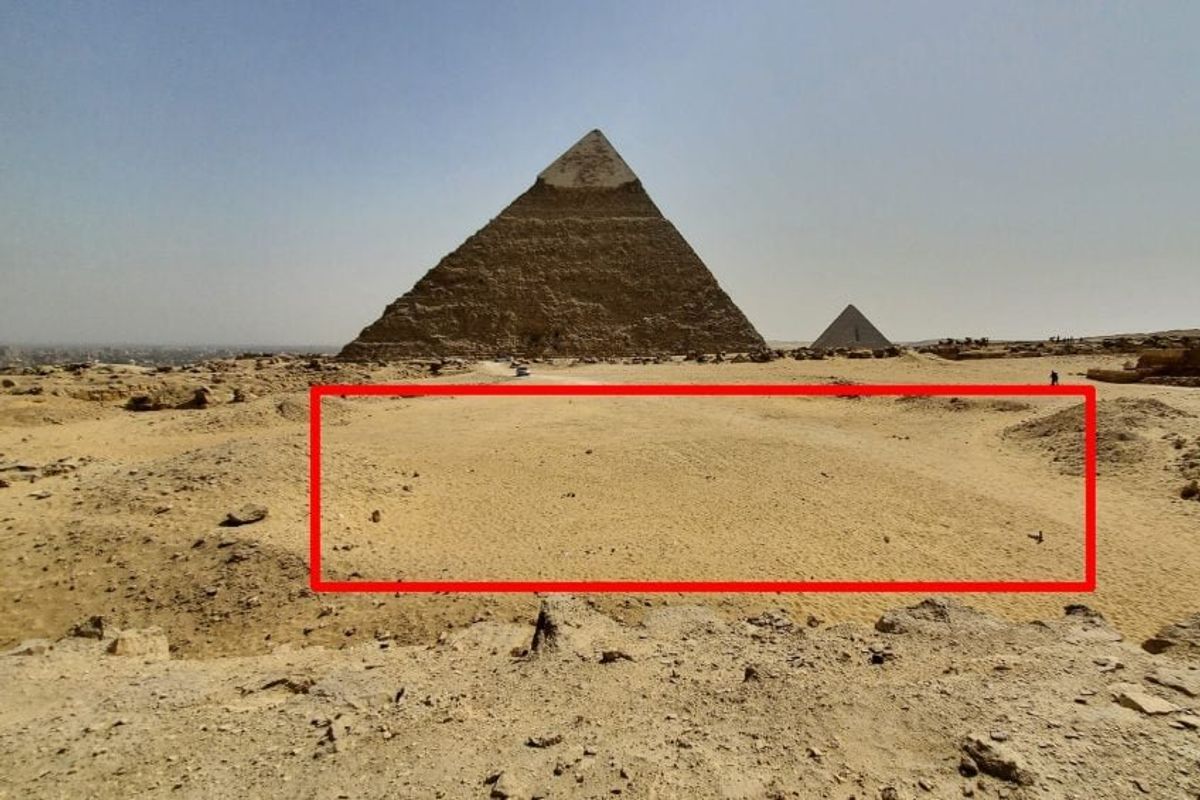
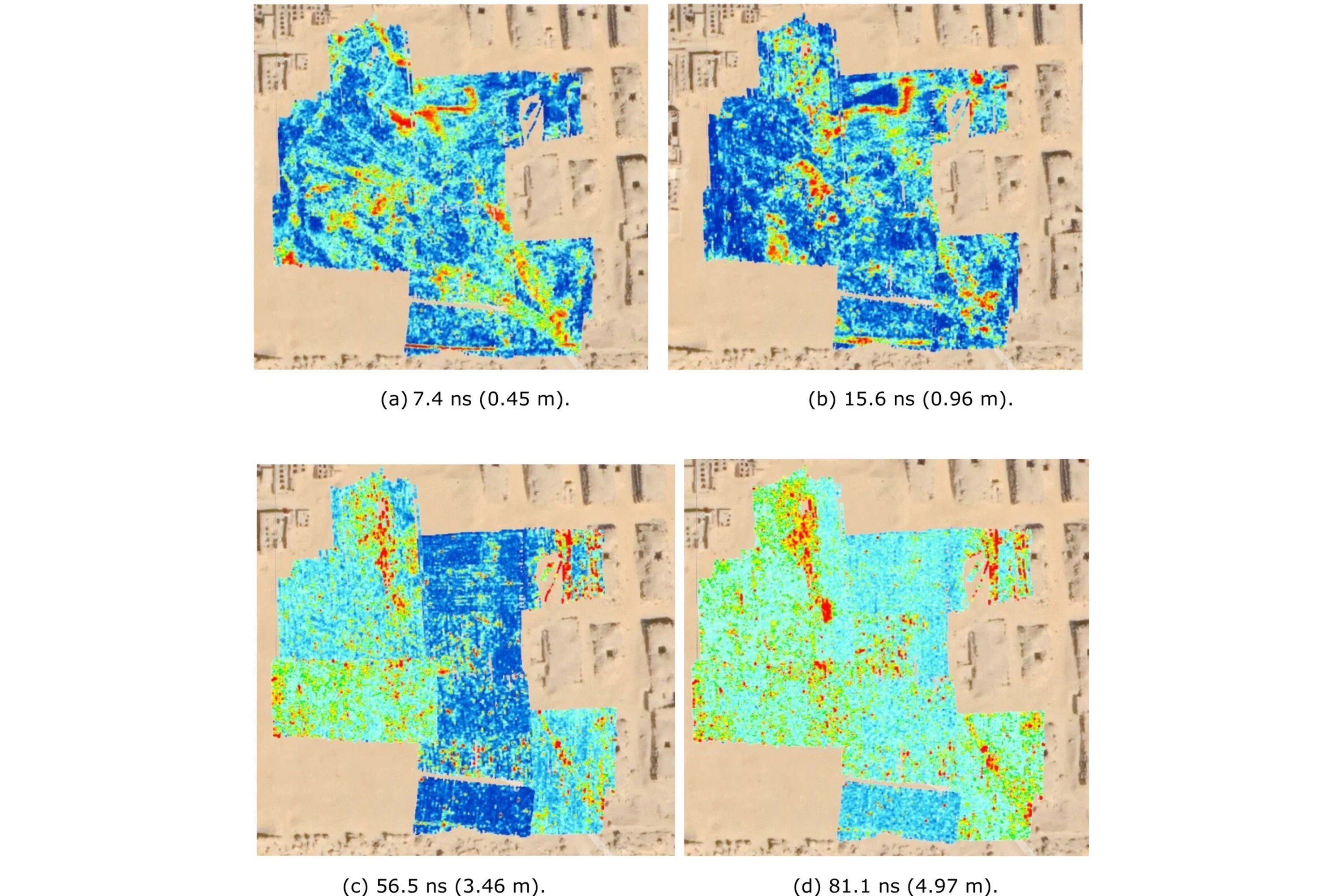
Detailed examination of the site, carried out between 2021 and 2023, pinpointed the initial anomaly approximately two metres (6.5 feet) below the surface.
The team said it looked like an L-shaped structure that was at least 10 metres (33 feet) long.
According to the scientists' findings, it "appears to have been filled with sand," indicating it was filled in after it was constructed.
The deeper structure was a "highly resistive anomaly", meaning it could be a mix of sand and gravel, or possibly an air void.
The researchers also mentioned that: “The structure causing the anomalies could be vertical walls of limestone or shafts leading to a tomb structure.”
However, they agreed: “A more detailed survey would be needed to confirm this possibility.”
They added: “We believe that the continuation of the shallow and deep large structure is crucial.”
.
Sato reckons the structure's shape is too sharp to be a natural occurrence.
Peter Der Manuelian, a professor of Egyptology at Harvard University who wasn't involved in the study, said it's taken so long to make this potentially groundbreaking discovery.
That despite being an "interesting area", this seemingly blank area of the Western Cemetery "has avoided investigation due to the lack of significant structures."
Der Manuelian also pointed out that we already know of L-shaped structures in Giza – namely offering chapels – and these are usually found above ground.
I'm not entirely sure what this anomaly signifies at this stage," he said. "But it's definitely worth investigating further.
Sign up for our free weekly newsletter
Posting Komentar