Mysterious structures unearthed beside the Great Pyramid of Giza
There's a location that ranks as one of the world's most famous attractions, yet beneath its desert surroundings, a wealth of mysterious stories remains untold.
Archaeologists have recently discovered a cryptic L-shaped structure hidden near an ancient monument, which they think was constructed around 4,500 years ago, roughly the same time as the monument itself.
What's particularly noteworthy is the existence of another "anomaly" hidden beneath this L-shaped feature, implying that this L-shaped feature may have been a passageway leading to the area beneath.
Utilizing ground-penetrating technology, a team made a remarkable discovery on the surface of Giza's Western Cemetery, uncovering mysterious structures.
This burial ground was designated for members of King Khufu's royal family as well as high-ranking officials. They were laid to rest in above-ground tombs called "mastabas," which have flat roofs.
However, there is a section in the center of the cemetery, encircled by these tombs, which surprisingly appears to be empty.
This led researchers to employ a method known as electrical resistivity tomography (ERT), paired with ground-penetrating radar (GPR), to conduct a more thorough investigation beneath the surface.
ERT sends electrical currents into the ground, using these to measure resistance and thus detect the presence of underlying features, while GPR sends radar into the ground, then uses the return signals to create a map of the underlying structures.
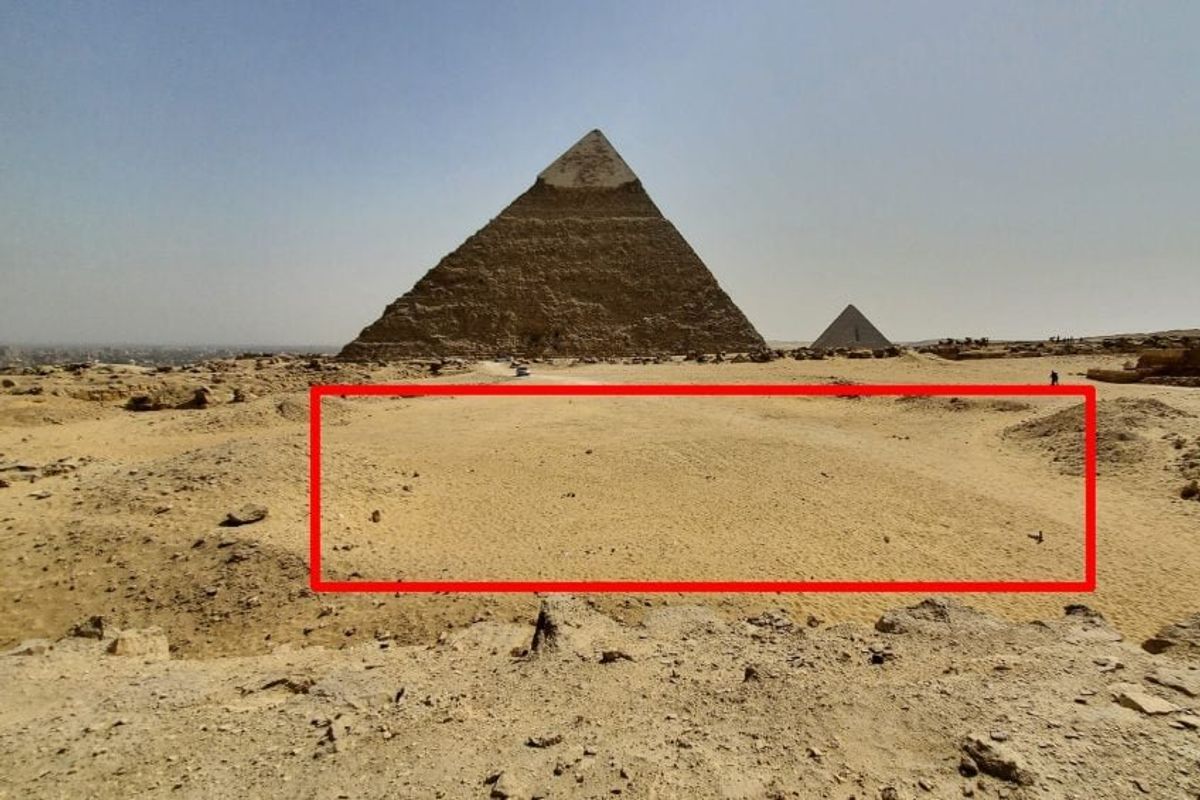
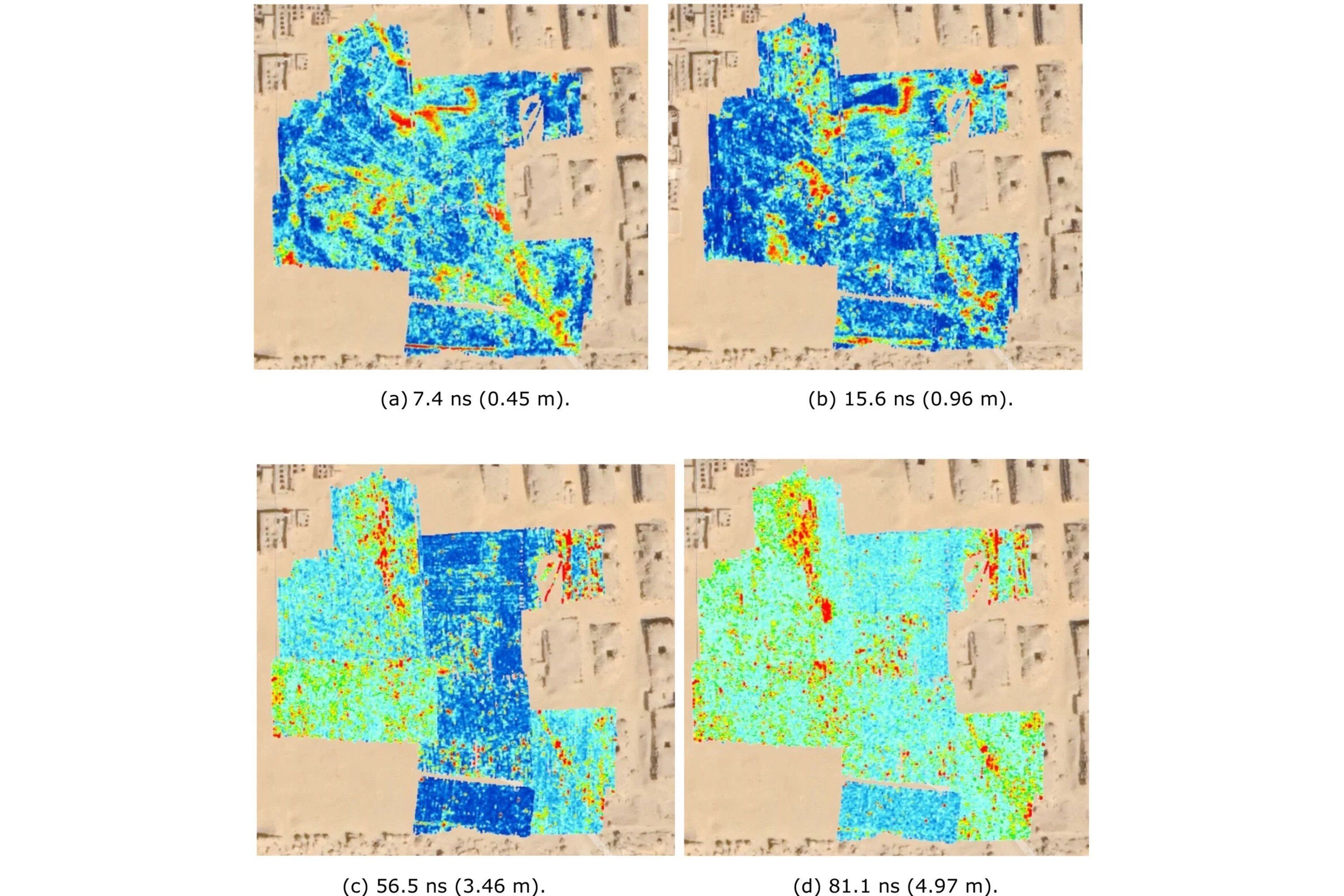
A meticulous examination of the area, conducted between 2021 and 2023, pinpointed the initial anomaly approximately two meters below the surface.
The team said it appeared to be an L-shaped structure that was at least 33 feet long.
According to what scientists read, it appears to have originally been filled with sand, indicating it was filled in after it was constructed.
The deeper analysis indicated they had encountered a "highly resistive anomaly," which suggested it could be a combination of sand and gravel or possibly a large air pocket.
The researchers also noted that: "The structure causing the anomalies could be vertical walls of limestone or shafts leading to a tomb structure."
However, they agreed that a more extensive survey would be needed to confirm this possibility.
They added: “We believe that maintaining the continuity of both the surface-level characteristics and the underlying, deep-rooted structure is significant.”
.
Sato stated that he is confident the structure is not a natural occurrence, as "the shape is too sharp."
Peter Der Manuelian, a professor of Egyptology at Harvard University who wasn’t involved in the investigation, said it took a long time to make possibly historic discovery.
That area of the Western Cemetery is "an interesting place," but it remains unexplored due to the lack of noticeable above-ground structures.
Dr. Manuelian noted that while we are aware of L-shaped structures in Giza, specifically offering chapels, they usually exist above ground.
I'm not yet clear on what this anomaly signifies," he said. "But it is definitely worth looking into further.
Sign up I didn't receive the original text to paraphrase. Please provide the text you would like me to paraphrase in a response, aside from providing a link. I will rewrite the text in the United States English language while keeping the meaning and context intact.
Posting Komentar