Egyptian pyramids were built using an incredibly clever machine, new research suggests
Have been a source of curiosity and enigma for centuries.
impressive use of water.
Now, a new study suggests that at least one of the major structures was built using machines that were much more advanced than previously thought.
On August 5, researchers propose that the famous 4,500-year-old Step Pyramid of Djoser was built with the use of a one-of-a-kind hydraulic lift system.
Historically, researchers thought the Step Pyramid was probably built using a network of ramps and pulleys.
Research led by Xavier Landreau of the French CEA Palaiseau Institute indicates that an ancient Egyptian engineering technique used nearby canals to power load-bearing cranes.

The study indicates that water may have been allowed to flow into two shafts within the pyramid, which were utilized to facilitate the placement of massive stone building blocks by raising and lowering a float.
The ancient Egyptians are well-known for their pioneering and mastery of hydraulic systems, including canals used for irrigation and barges for moving massive stone blocks.
“Researchers have begun an exciting new line of investigation into harnessing water pressure to construct the enormous architecture developed by the ancient Pharaohs.”
The Step Pyramid is thought to have been constructed sometime around 2680 BCE as a burial ground for Pharaoh Djoser of the Third Dynasty. The exact way it was built, however, has been a mystery until now.
Landreau and his associates argue that a nearby previously unidentified structure, known as the Gisr el-Mudir enclosure, was actually a "check dam" utilized to capture water and sediment.
They propose that a series of compartments dug into the ground just outside the pyramid may have served as a water treatment facility. This would have allowed sediment to settle as water flowed through each compartment in sequence.
From there, after flowing into the pyramid's shafts themselves, the pressurized water would have floated the building stones to the upper levels of the structure via an internal shaftway, in a process known as "volcano" construction.
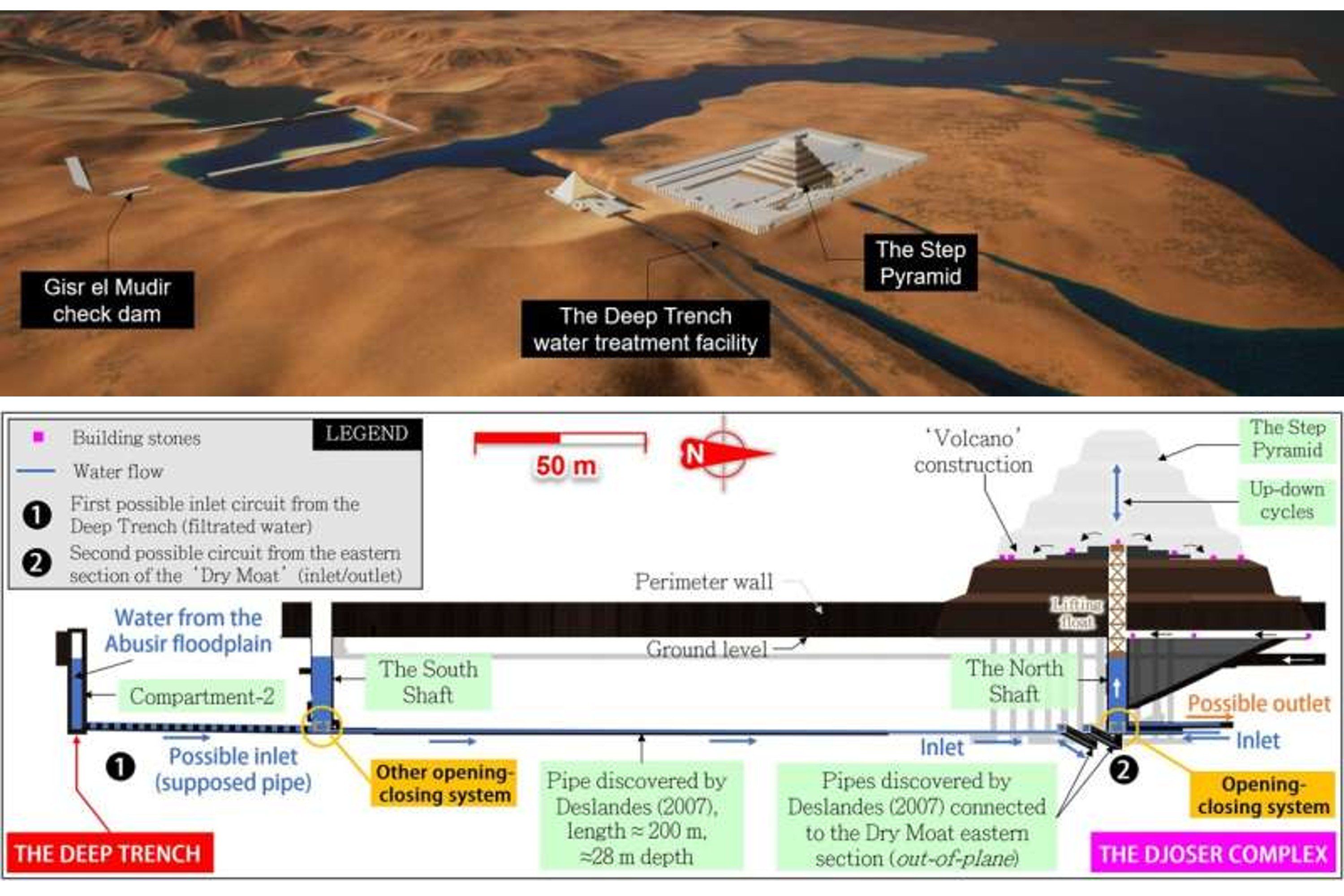
However, while the authors are certain that "the internal structure of the Step Pyramid is consistent with a previously unreported hydraulic lifting device," they still believe further research is required.
They now aim to figure out how water might have flowed through the tunnels, as well as how much water was present in the surrounding area thousands of years ago.
They acknowledge that while other structures, like ramps, were likely used to help build the pyramid, a hydraulic lift system could have been utilized in the construction process if there was an ample supply of water, probably sufficient to support the building process.
They stress that their research, conducted in collaboration with "several national laboratories", has resulted in "the discovery of a dam, a water treatment facility, and a hydraulic elevator, which would have facilitated the construction of the Step Pyramid of Saqqara."
They conclude: "This study initiates a new area of research for the scientific community: the use of hydraulic power in constructing the pyramids of Egypt."
Sign up There is no text provided for paraphrasing. Please provide the text you'd like me to paraphrase, and I'll be happy to assist you.
How to join The 's free WhatsApp channel
Posting Komentar