A Young Georgia Couple Restores An 1800s Family Farmhouse To Welcome The Next Generation
They paid tribute to the past by completely dismantling their house, carefully taking it apart section by section, and then reconstructed it using some of the original materials they had salvaged.
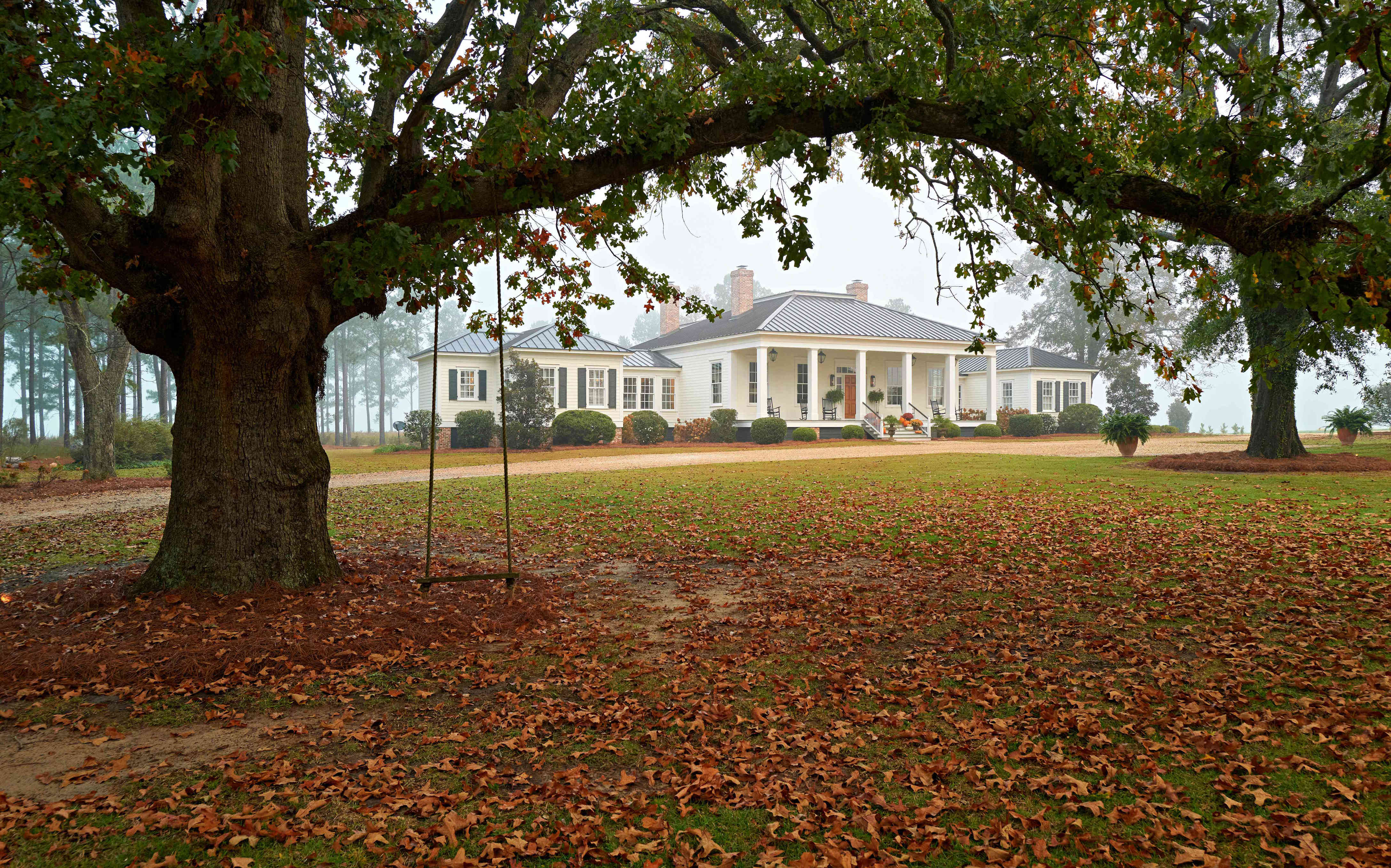
This family's farm was originally bought by their ancestors back in 1853. "When MeriBeth and I got married, we realized it was the perfect place to settle down, but we also knew that since it was almost 200 years old, the restoration process would be quite a challenging task."

Rebuilding The Family Place
The couple didn't have a chance to get started on fixing up the old house before they met architect Jim Strickland from Historical Concepts, who they shared their plans for the home with. "I'll never forget it," MeriBeth says, "He sketched it right there on a napkin and said, 'If you want six more generations to live here, we need to rebuild it. Maintain the character of the home, but build a modern version for it.'" In 2016, after the arrival of their first son, the McNeills decided it was time to restore the farmhouse. "I got in touch with Jim, who already had plans drawn up, and within a month we were tearing down the old house board by board," Jess says.
We managed to reuse almost all of the original wood and brick from the studs, floor joists, and other structural components of the building," says MeriBeth. "Most items that aren't painted are still from the old structure.
Although the floors were in no condition, the building's past as a dance hall in the 1920s allowed them to use hand-planed heart pine from the walls and ceilings to replace them entirely. "When we disassembled the old house, we stripped away the old plaster and wallpaper before we got to the foundation and found that the place was coated in exquisite wood that had been harvested from the property," Jess notes. "It was really the family's true treasure."
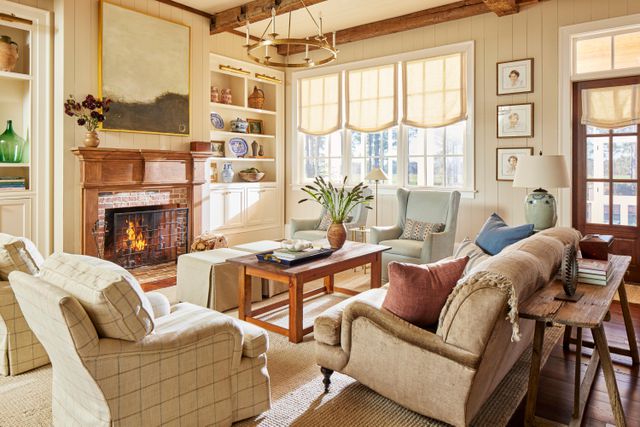
When it came to restoring it to its former glory, they worked with Strickland to identify the original elements that were part of the house at its best, such as the large windows and 12-foot ceilings, and used those as their reference point. The house had undergone many changes over the years, including lowering the ceilings and reducing the size of the windows to make room for central heating and cooling systems, but their main goal was to return the home to its "historical prime," says Jess.
"According to family tradition, it's said that every time a new baby was born in the house, an oak tree would be planted," notes MeriBeth about the property's long-standing oak trees.
They converted the children's bedrooms and bathrooms into what was once the attic space and added dormer windows to the back so that natural light could enter. Because of the site's slope, they were also able to include a basement in the design without affecting the building's exterior appearance. "It was crucial to us that it still appear to be a one-story house from the front," she says.
Doubling the View
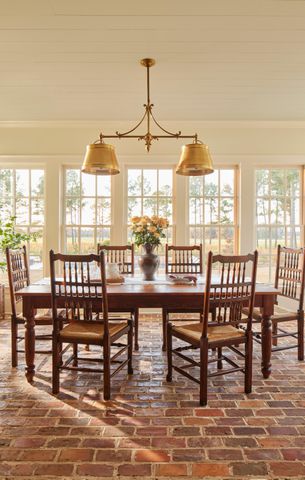
The newly renovated areas give off a fresh feel, but that's not to say they lack a rich history. The floors are made from old fireplace bricks, and the dining table is crafted from the front porch's original columns. "We couldn't use them for structural reasons, but I thought about the 150 years' worth of conversations on that porch and said, 'I want to eat on the columns of the old house,' " remembers Jess. "We even left some of their white paint at the bottom of the table."
.
Celebrating Family History
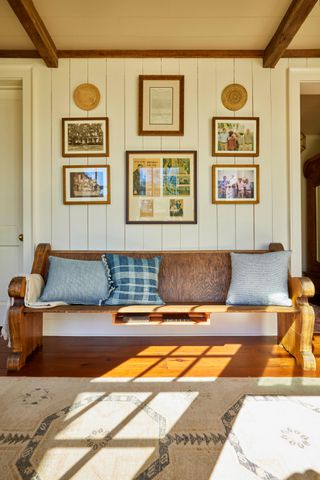
The home's history is referenced in almost every room, with old studs from the 1800s being reused as unfinished wood trim and salvaged mantleplaces being put back in their original positions. A hallway that links the new wings to the remodeled core serves as a connection to the past, bringing everything together like a time capsule. "This is the church pew I sat in when I was a child," states MeriBeth. "At the other end of the hallway is Jess' church pew."
Memorabilia from the property includes a picture of the original mortgage used to buy the land, clippings from the local newspaper, and photographs, such as a 19th-century image of the farmhouse and a circa-1905 black-and-white photo of a family reunion that took place on the farm. The display also features two more recent pictures that capture the connection of four generations of the McNeills. One is a snapshot of Jess as a toddler sitting on a tractor with his father and great-grandfather; the other shows the family's youngest son as a baby sitting on the same piece of equipment, surrounded by family members, echoing the past.
Finding the Just-Right White
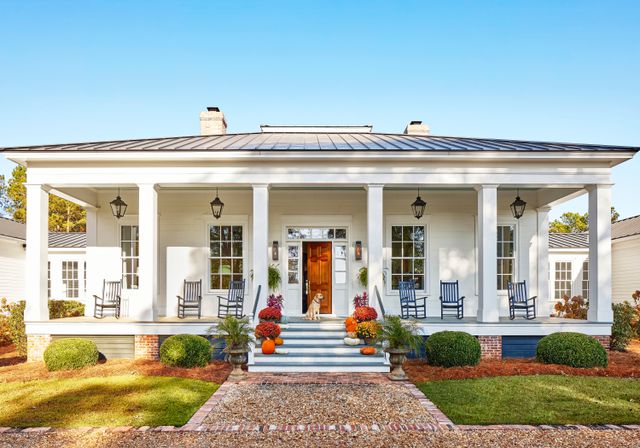
"We can't use a pure white color, since it would get all dusty with our peanut crops nearby," she says.
There are several ways to create new spaces using older elements. For instance, an Australian artist creates sculptures from discarded items like cutlery and jewelry. She calls her art "jewelry jams," which showcases her creative use of materials.
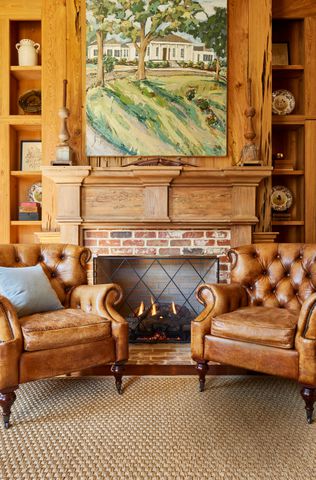
The McNeills stayed true to the integrity of the parlor of the home, creating a cozy study that suited their needs by utilizing the original hearth stones and mantel and incorporating the 100-plus-year-old sofa and side table with the other furnishings.
I don't see any text to paraphrase. Please provide the text, and I'll get started.
accentuates a contrasting tone in a large kitchen island
This hardworking area does it all, featuring countertops crafted from the structure's reclaimed wood - perfect for serving meals - and plenty of storage space for dry goods and heirloomed china.
Creating a Storied Suite
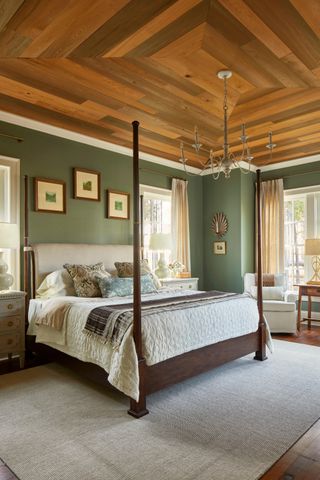
To create a peaceful, nature-inspired environment.
on the ceiling.
Sign up for our subscription!
.
Posting Komentar